
Wheel alignment vs balancing is one of the most common mix-ups we hear about on the phone. Both involve the wheels and both tend to get done when you buy tyres. They fix different problems, though, and paying for the wrong one leaves the problem exactly where it was.
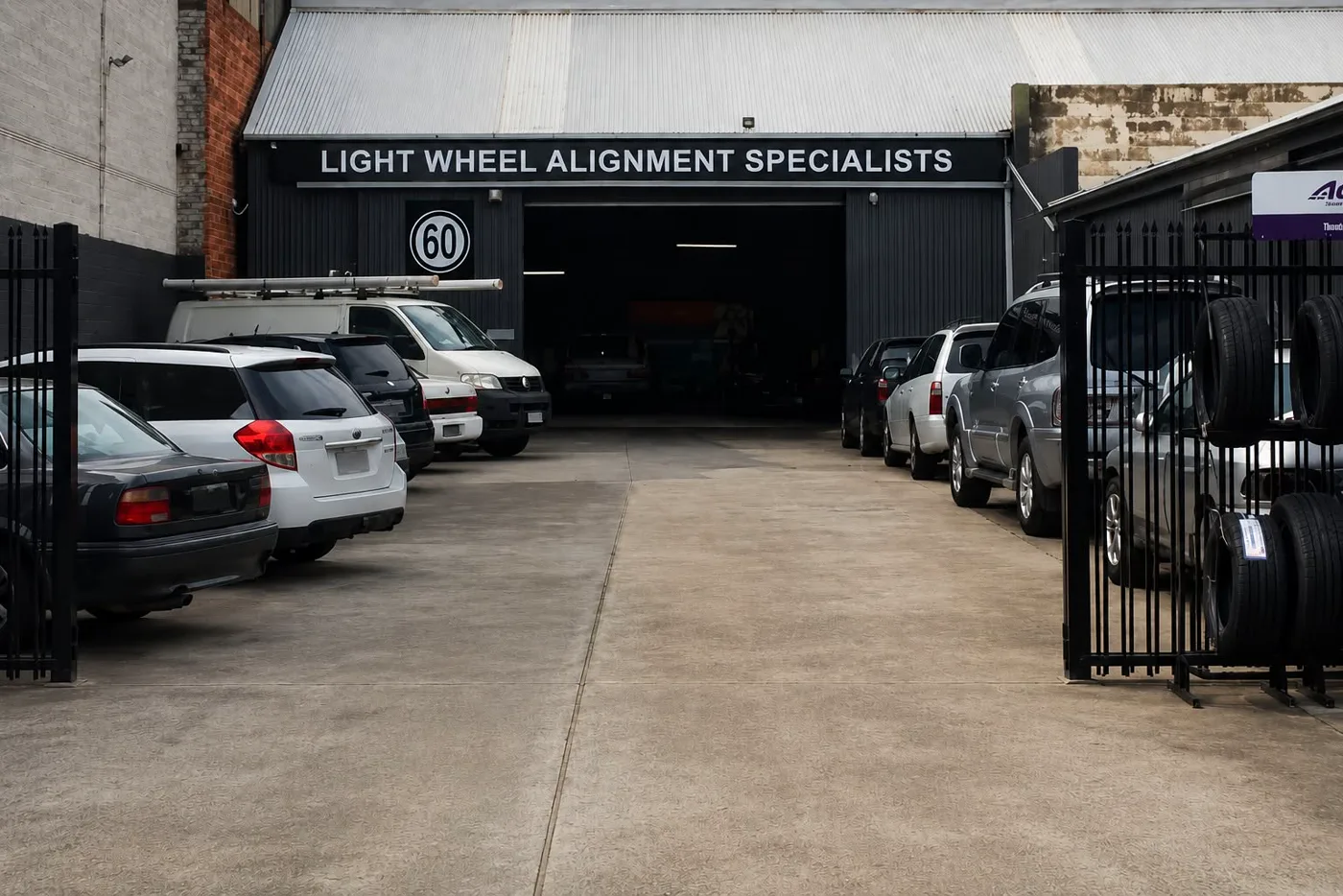
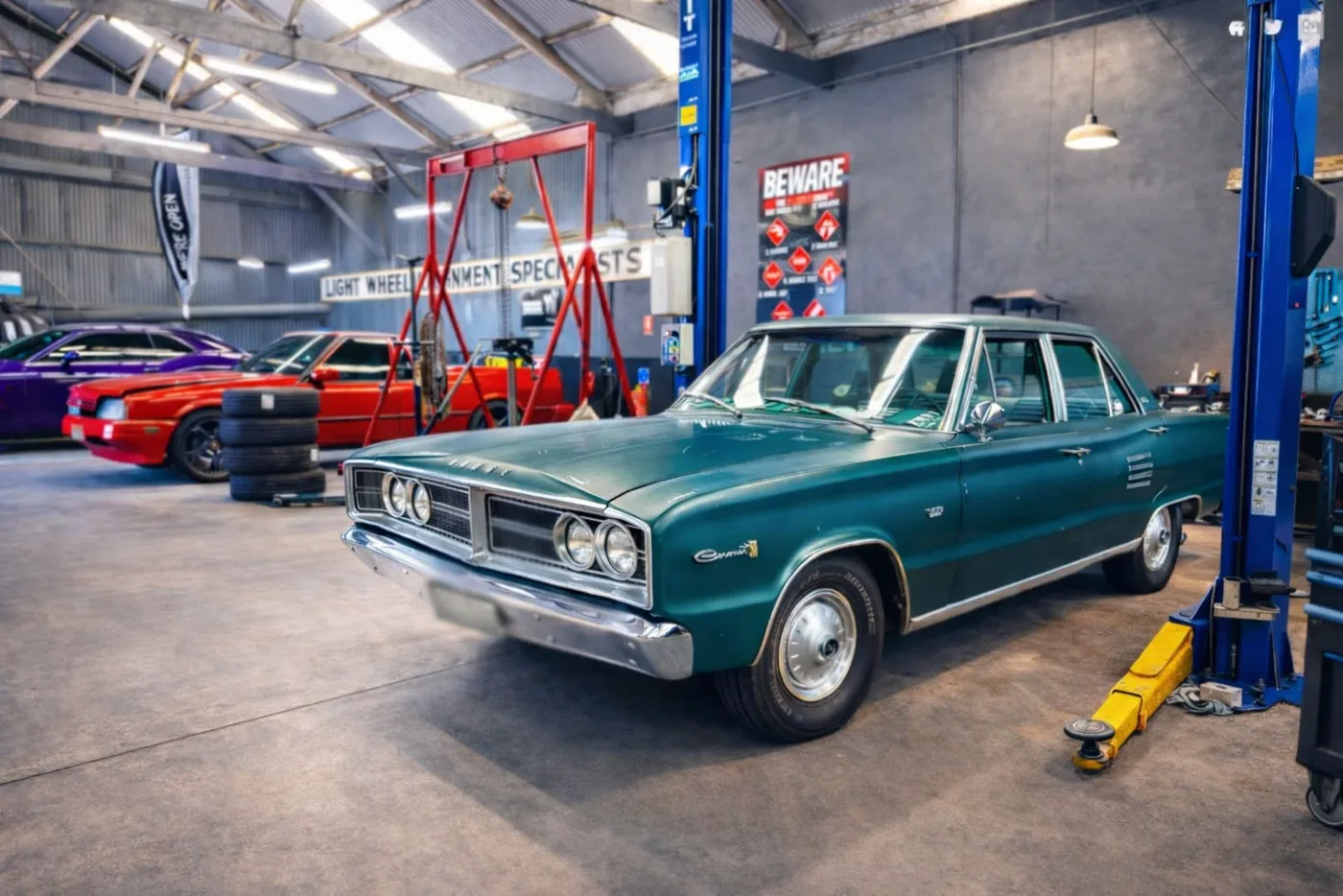
We are a wheel alignment workshop at 60 Byron Place in the Adelaide CBD, and we change and balance tyres as well. Here is how to tell which one your car needs.
What is the difference between wheel alignment and balancing?
Balancing is about weight. No tyre and wheel is perfectly even all the way round. A heavy spot of a few grams turns into a hop or a wobble once the wheel is spinning hundreds of times a minute. To balance it, the wheel comes off the car and goes on a balancing machine, which spins it, finds the heavy spot and shows where to fit small weights to the rim to cancel it out.
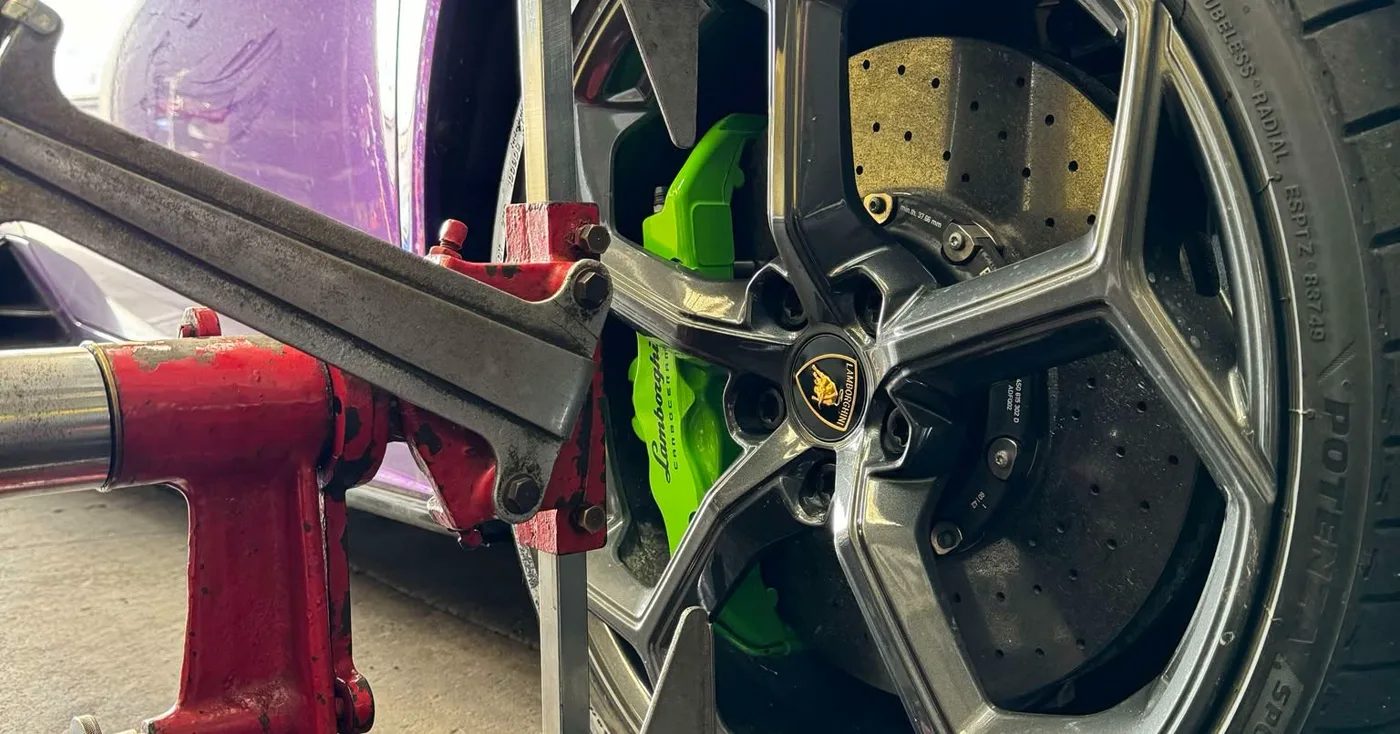
Alignment is about angles. The wheels stay on the car and the car goes on the alignment rack, where we measure how each wheel sits: camber, the tilt in or out seen from the front; toe, which way the tyres point compared with the centre line of the car; and caster, the angle of the steering axis seen from the side. Those are adjusted back to the manufacturer's settings for your make, model and year.
Put simply, balancing makes each wheel spin smoothly and alignment makes all four roll straight. A perfectly balanced wheel can still be pointing the wrong way, and a perfectly aligned car can still shake.
| What you notice | More likely | Why |
|---|---|---|
| Steering wheel shakes at highway speed | Balancing, front wheels | A heavy spot on a front wheel comes straight up the steering column |
| Seat or floor vibrates at speed | Balancing, rear wheels | A rear imbalance is felt through the body rather than the steering |
| Car pulls to one side on a flat road | Alignment | Toe or camber out on one side, or one tyre low on air |
| Steering wheel sits off centre driving straight | Alignment | Toe out of adjustment, often after a knock |
| One edge of a tyre wearing faster | Alignment | The tyre is being scrubbed sideways across the road |
| Patchy, scalloped wear around the tread | Balancing, or worn shock absorbers | The tyre is bouncing instead of rolling evenly |
How do you tell which one your car needs?
Start with when it happens. A balance problem depends on speed. The car is usually smooth around town, starts to shake as you get up to highway speed, and may settle again if you go a little faster or slower. An alignment problem does not care much about speed. A pull or a crooked steering wheel is there at 40 km/h in a side street, just as it is on the freeway.
Then notice where you feel it. A shake in your hands usually means one of the front wheels. A buzz through the seat and the floor usually points to the back.
Some faults imitate both. A tyre with a bulge or a broken belt inside it will shake however well it is balanced, and a rim bent on a pothole does the same. A pull that only happens when you brake is a brake fault, not alignment, and our brake repair page covers what we look at. That is why we look over the tyres and the front end before recommending either job.
Do you need both when you get new tyres?
Balancing, yes, every time. A new tyre has never been balanced on your wheel, so it gets done as part of fitting it. We change and balance tyres at the workshop with premium and more affordable options in stock, as listed on our car services page.
An alignment check is worth doing with new tyres too. If the angles are out, the new set starts wearing unevenly from the first drive, and the edge you just paid for goes first. The other times we recommend a check:
- After a solid hit on a pothole or a kerb, even if nothing looks bent.
- After steering or suspension parts are replaced.
- After the car has been lowered or lifted.
- Every 10,000 kilometres or six months, usually with a service or tyre rotation.
What happens if you put it off?
Neither one leaves you stranded overnight. They cost you slowly. An out of balance wheel keeps hammering the tyre, and over time the shock absorbers, wheel bearings and steering parts that soak up the vibration. Bad alignment wears tyres unevenly and adds drag, because a tyre that is not pointing straight is being pushed partly sideways, and the engine burns more fuel to overcome it.
Worn parts are the trap. If a bush or a tie rod end has play in it, the alignment will not hold, so the part is replaced first as part of our car repair and maintenance work. Setting the angles on a worn front end means paying for the same job twice.
Getting it checked at Byron Place
When you call, tell us what the car does and at what speed. A standard wheel alignment takes 45 to 60 minutes and you are welcome to wait at the workshop while it is done. The equipment and the three angles are covered in more detail on our wheel alignment in Adelaide page.
To book, request a quote with your rego or make and model, or call (08) 8212 1448. We are open Monday to Friday, 8:30am to 4:30pm.