Most people who ring us asking "do I need a wheel alignment?" have already noticed something. The car wanders on the freeway, the steering wheel sits a few degrees off when you are driving straight, or one front tyre has gone bald on an edge while the rest of the tread looks fine. Sometimes the answer is yes. Sometimes it is a tyre pressure, a balance problem or a worn part, and an alignment on its own would not fix it.
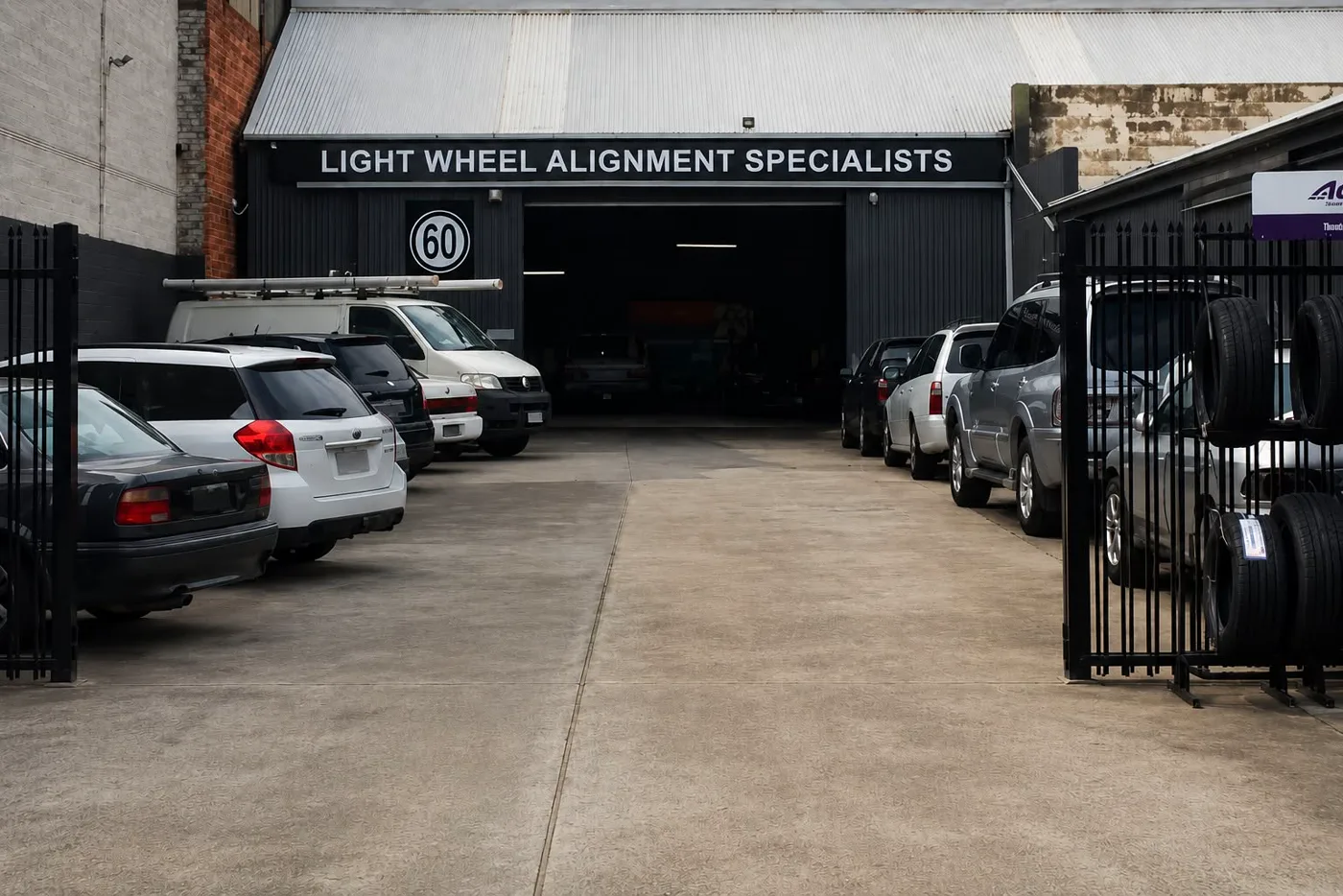
We are a wheel alignment workshop at 60 Byron Place in the Adelaide CBD. Here is what we look for on the rack, and what we rule out first.
What are the signs your car needs a wheel alignment?
Alignment is the angle each wheel sits at. Camber is the tilt in or out, seen from the front. Toe is the direction the tyres point compared with the centre line of the car. Caster is the angle of the steering axis, seen from the side. Those angles drift over time from everyday driving, potholes, speed humps and the odd kerb. Once they drift far enough, the car tells you.
| Sign | What you notice | Usually points to |
|---|---|---|
| The steering pulls | The car keeps drifting left or right on a flat, straight road. | Toe or camber out of spec, or uneven tyre pressures |
| Crooked steering wheel | Driving dead straight, the logo on the wheel is tilted to one side. | Toe out of adjustment, often after a knock or steering work |
| Uneven tyre wear | The inside or outside edge of a tyre is wearing faster than the rest. | Camber or toe out, scrubbing the tyre across the road |
| Squealing tyres | A light squeal on normal, low speed corners, like turning into a car park. | Toe out, dragging the tyres sideways through the turn |
| Loose or shaking steering | Extra play before the car responds, or a shake in your hands at highway speed. | Worn steering or suspension parts, or a wheel out of balance |
Uneven wear is the expensive one, because by the time you can see it the tyre is already partly gone. Run your hand across the tread of each front tyre. If one edge sits noticeably lower, or the tread feels feathered, smooth one way and sharp the other like a saw blade, the tyre is being dragged sideways as it rolls.
Two checks before you worry about a pull. Most roads are built with a slight crown so rain runs off, and a correctly aligned car will still drift gently towards the kerb on a crowned road. Test it on a flat, quiet stretch or an empty car park instead. Then check the tyre pressures, because one soft front tyre will pull a car towards that side all by itself.
Could it be something other than the alignment?
Quite often, yes. An alignment sets angles. It does not fix a worn part and it does not fix weight.
- Shaking at highway speed is usually balance. Balancing corrects how the weight is spread around the tyre and wheel so they spin smoothly. Alignment adjusts the suspension angles so the tyres roll parallel and flat on the road. A vibration through the wheel at 100 km/h points to balance first.
- A pull that only happens when you brake is a brake fault. If it tracks straight until you press the pedal, suspect a sticking caliper or uneven pads. Our brake repair page covers what we check.
- Clunks, knocks and vague steering usually mean worn parts. Tie rod ends, ball joints and bushes all wear out, and if they have play in them an alignment cannot hold. They get replaced first as part of our car repair and maintenance work.
That is why the suspension gets looked at before anything is adjusted. Setting the angles on a car with a worn part is paying for an alignment that will not last.
When should you get it checked even if the car feels fine?
We recommend a check every 10,000 kilometres or every six months. The easy way to remember it is to have it done with your routine logbook service or tyre rotation. Outside that, book a check after any of these:
- A new set of tyres. Fresh rubber on a car that is out of alignment starts wearing unevenly from the first drive.
- A solid hit on a pothole or a kerb, even if nothing looks bent.
- Steering or suspension work, such as new tie rod ends, struts or springs.
- Lowering the car or fitting a lift kit. Change the ride height and you change the angles.
What happens when you book a wheel alignment with us?
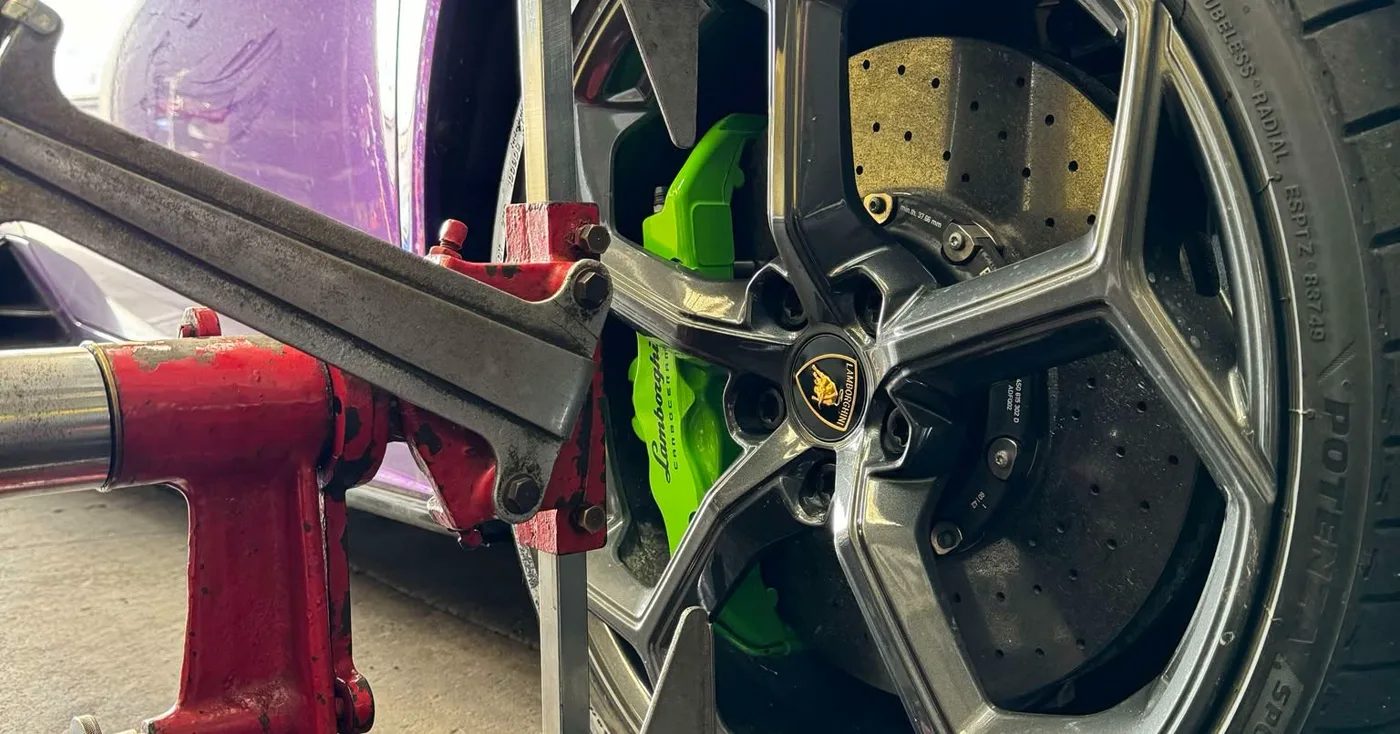
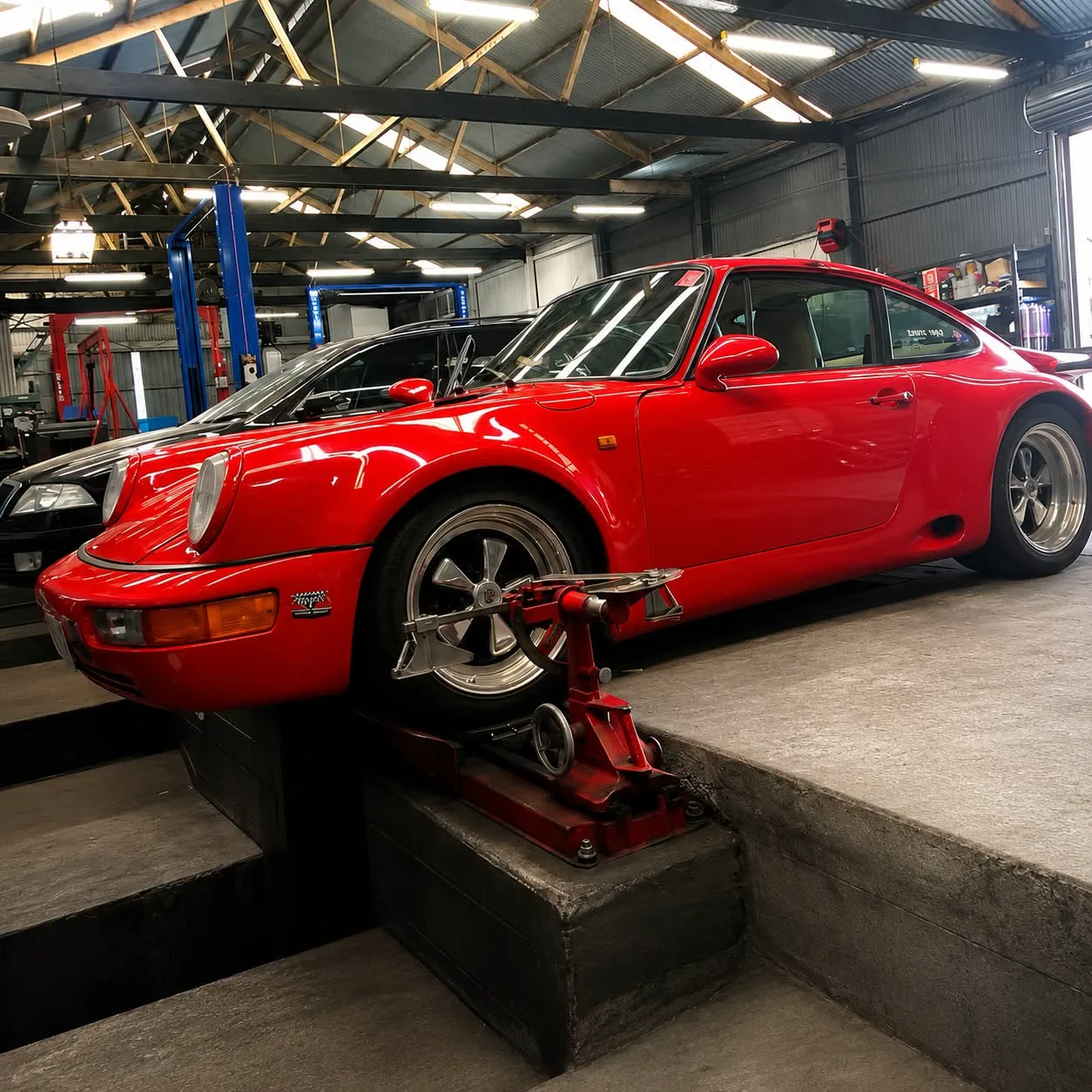
The car goes on the rack and we attach measuring targets to all four wheels. Every angle is read digitally and compared with the manufacturer's published settings for your exact make, model and year, so the car is set to its own figures rather than a general number. Camber, caster and toe are then adjusted wherever the car has adjustment available.
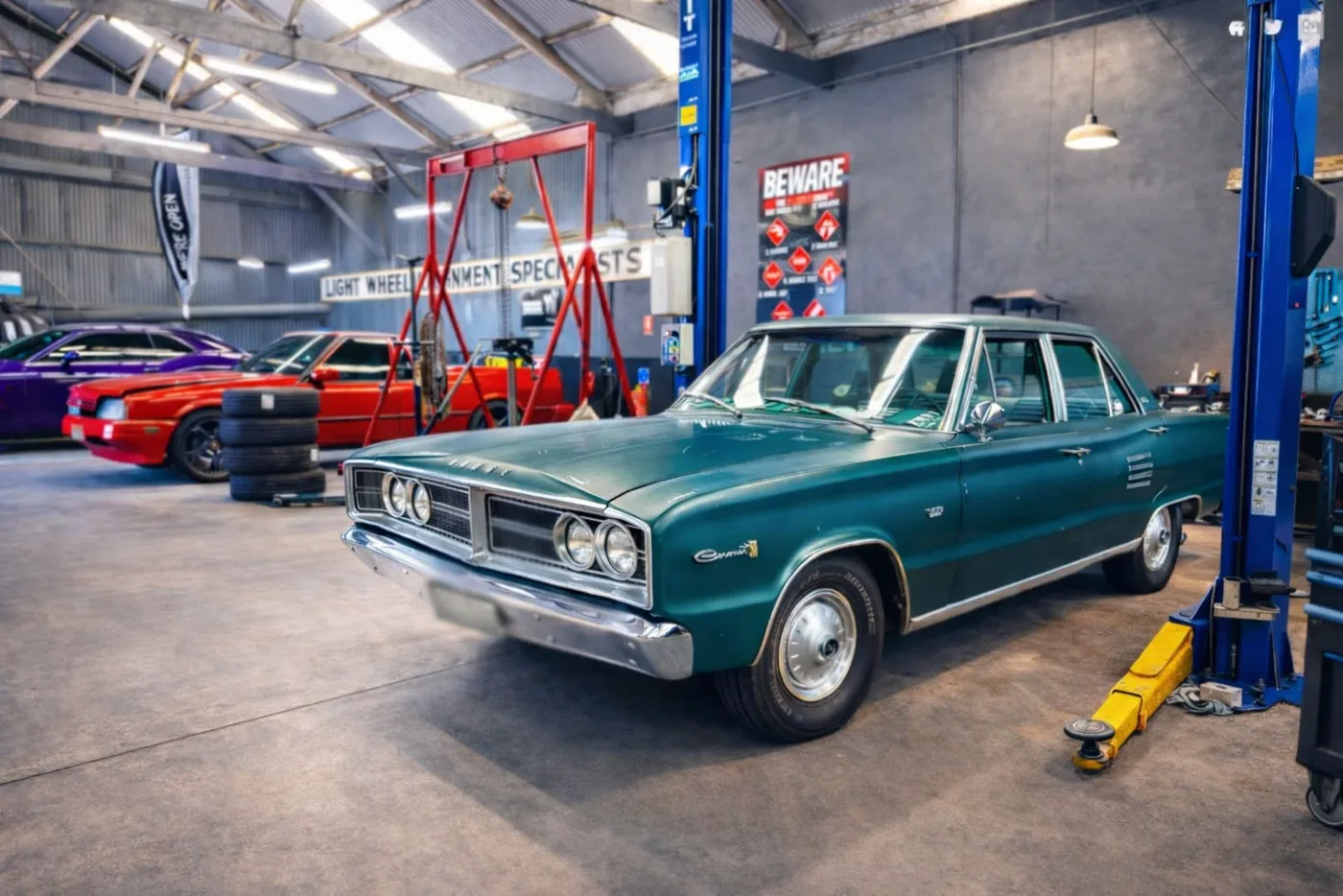
A standard alignment takes 45 to 60 minutes, and you are welcome to wait at the workshop while it is done. Small hatchbacks, family cars, classics, lowered performance cars and lifted four wheel drives all go on the same rack and get the same full check.
There is more on the equipment and the three angles on our wheel alignment in Adelaide page. When you are ready, request a quote with your rego or make and model, or call (08) 8212 1448. We are open Monday to Friday, 8:30am to 4:30pm.